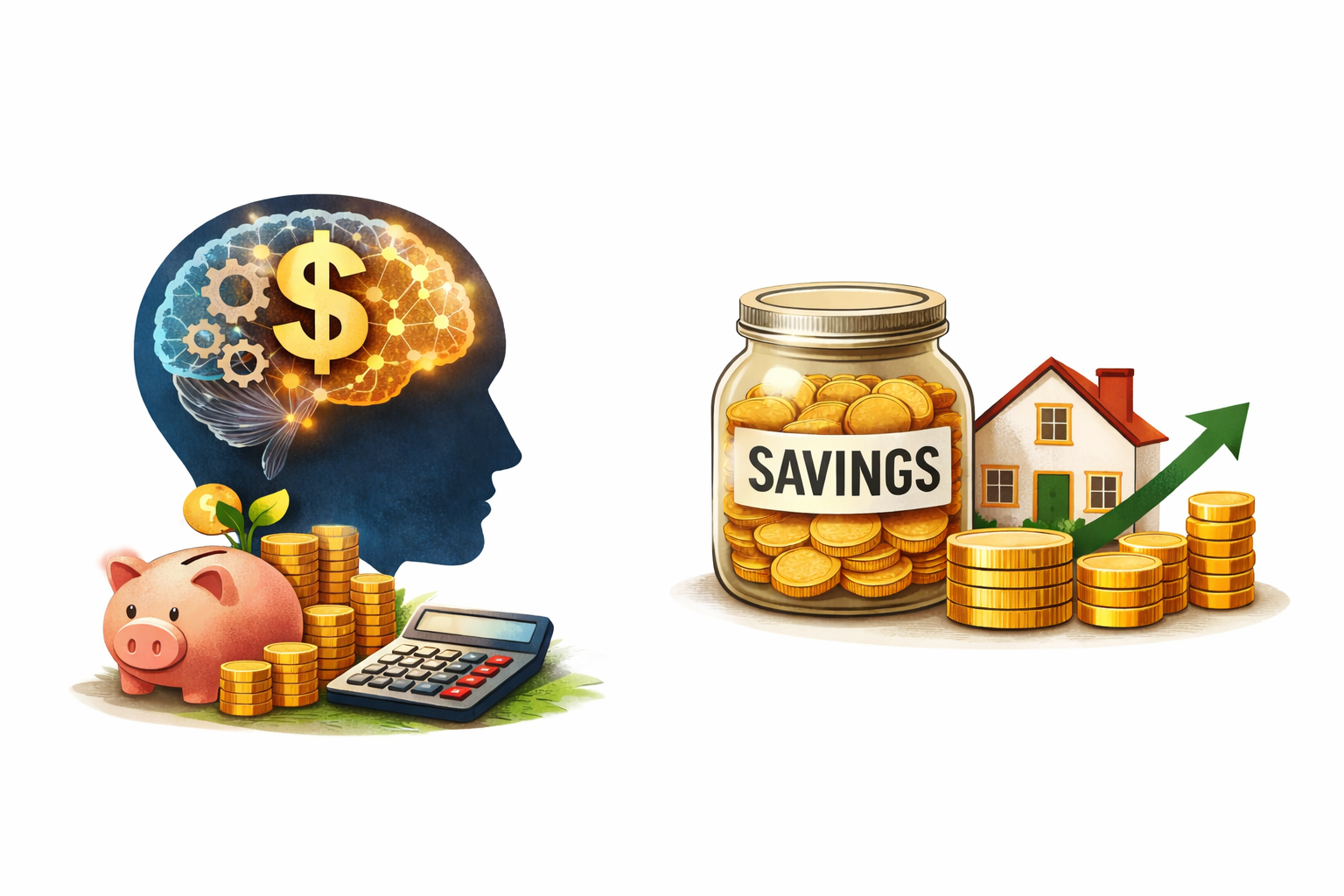
Money isn’t just about numbers, income, or budgets—it’s deeply emotional. The way you think, feel, and behave around money plays a bigger role in your financial success than most people realize. If you’ve ever wondered why saving money feels difficult even when you know it’s important, the answer often lies in your mindset.
Understanding the psychology of money can help you break bad habits, build better ones, and finally take control of your financial future.
Why Your Mindset Matters More Than Your Income
Many people believe that saving money becomes easier once they earn more. But in reality, higher income doesn’t automatically lead to better savings. There are people earning modest salaries who save consistently, and others with high incomes who struggle to keep money in their accounts.
This happens because money habits are formed in the mind first. Your beliefs about money—often shaped during childhood—affect how you spend, save, and invest.
For example, if you grew up hearing phrases like “money is hard to earn” or “we can’t afford that,” you might develop fear or anxiety around money. On the other hand, if money was used freely without planning, you may struggle with discipline.
The Emotional Side of Spending
Spending is rarely logical. It’s emotional.
People often spend money to feel better, not because they need something. This is known as emotional spending. Stress, boredom, sadness, or even excitement can trigger unnecessary purchases.
Think about it—how many times have you bought something online just because you were having a bad day?
The brain releases dopamine (a “feel-good” chemical) when you buy something new. This creates a temporary high, which makes spending addictive. But once that feeling fades, you’re left with less money and sometimes regret.
Why Saving Feels Difficult
Saving money requires delayed gratification, and that’s where most people struggle.
Your brain is naturally wired to prefer immediate rewards over future benefits. This is why spending today feels more satisfying than saving for something months or years away.
For example, choosing between:
- Buying a new phone today
- Saving that money for future security
Most people emotionally lean toward the first option, even if the second is more beneficial long-term.
This is not a lack of intelligence—it’s simply how human psychology works.
The “Scarcity vs Abundance” Mindset
Your financial behavior is heavily influenced by whether you have a scarcity mindset or an abundance mindset.
A scarcity mindset makes you believe there is never enough money. This can lead to fear-based decisions, hoarding, or even impulsive spending because you feel money might disappear anyway.
An abundance mindset, on the other hand, helps you see money as a tool that can grow over time. People with this mindset are more likely to save, invest, and make thoughtful decisions.
The goal is not to ignore reality but to shift your thinking from fear to control.
Simple Psychological Tricks to Save More Money
You don’t need complex financial strategies to save money. Small psychological changes can make a big difference.
1. Automate Your Savings
When you remove decision-making, saving becomes easier. Set up automatic transfers to your savings account as soon as your income arrives. This reduces the temptation to spend.
2. Use the 24-Hour Rule
Before making any non-essential purchase, wait 24 hours. This pause helps your emotions settle and allows logical thinking to take over.
3. Make Saving Visible
Your brain responds to visual progress. Track your savings using apps or simple charts. Seeing growth motivates you to continue.
4. Set Emotional Goals
Don’t just save money—attach it to a purpose. Whether it’s financial freedom, a house, or security for your family, emotional goals are more powerful than numbers.
5. Limit Exposure to Temptation
Unsubscribe from unnecessary marketing emails and avoid browsing shopping apps without purpose. The less you see, the less you desire.
The Role of Habits in Financial Success
Saving money is not about one big decision—it’s about small daily habits.
Habits reduce the need for willpower. When saving becomes automatic, you no longer struggle with constant decisions.
For example:
- Saving a small fixed amount every week
- Avoiding impulse purchases
- Planning expenses in advance
Over time, these habits compound into significant financial growth.
How to Rewire Your Money Mindset
Changing your relationship with money doesn’t happen overnight, but it’s possible with consistent effort.
Start by becoming aware of your current behavior. Ask yourself:
- Why do I spend money when I don’t need to?
- What emotions trigger my spending?
- What does money mean to me?
Once you understand your patterns, you can begin to change them.
Replace negative beliefs with empowering ones. Instead of thinking, “I can’t save,” start saying, “I’m learning to manage my money better.”
Your brain adapts to what you repeatedly tell it.
Money is not just a financial issue—it’s a psychological one. Your habits, emotions, and beliefs shape your financial reality more than your income ever will.
The good news is that you don’t need to be perfect to improve. Even small changes in your mindset can lead to big results over time.
Start simple. Be consistent. And most importantly, understand that mastering money begins with mastering your mind.